

The bank made a Rs 67 crore net profit, up 21% from the previous year. Its deposits grew 8%, the loan book 10%. Net bad loans dropped from 7.53% to 6.07%. So why was the banker, who headed the bank, not promoted?

'This will be our first large-size bank partner, and hence, the partnership will be a game-changer for us.'

Companies providing portfolio management services (PMS) had a tough time beating the benchmark index in January, with more than half of the schemes invested in large companies underperforming in the run-up to the Union Budget. The Nifty 50 index was down 2.5 per cent during the month. Only around 44 per cent of PMS schemes did better, among the schemes investing in large-cap companies. The analysis is based on data from industry tracker PMS Bazaar. Half the mid-cap schemes outperformed, while the rest underperformed.

Cases of front-running mostly happen when large asset managers and intermediaries are involved in bulk trades as their transaction size is generally big enough to impact the stock price.

Ask rediffGURU and PF and MF expert Janak Patel your mutual fund and personal finance-related questions.

A lower risk appetite among investors has driven gold, traditionally a safe-haven asset, to record highs so far this year. Fuelled by geopolitical tensions in West Asia, robust demand from central banks - particularly in Asia - and US President Donald Trump's tariff volleys, spot gold touched an all-time high of $2,956 per ounce on February 24 in the international markets.

The mutual fund industry's QAAUM (Quarterly Average Assets Under Management) was up 37 per cent year-on-year (Y-o-Y) (9 per cent Q-o-Q) to hit Rs 59 trillion (end Q1FY25). The equity segment grew 55 per cent Y-o-Y and equity formed 56 per cent of total AUM, up 49 per cent in Q1FY24. Sequentially, AUM grew by Rs 5 trillion.

Don't exit from growth-style funds as they may benefit next from a shift in investor preference.

'$125 million for the hull and the remaining of over $350 million for liability.'

'...you evaluate three key factors before committing your money.'

Tech tycoon Azim Premji's global investment arm, Manipal Group Chief Ranjan Pai's family office and 360 ONE Asset have sought approval from fair trade regulator CCI to acquire stakes in domestic carrier Akasa Air's parent company SNV Aviation. "The proposed transaction involves the acquisition of certain shareholding by each of PIOF, Claypond and 360 Fund (through its various schemes and affiliates) in Akasa Air," said a notice filed with the Competition Commission of India (CCI) on Wednesday.

'While investors believe in India's long-term growth story and resilience amid global uncertainty, they see near-term risks around the direction of a global trade war.'

The move is to align affordable housing finance flows to the increase in property costs and inflation, says Raghu Mohan.

Movement in the equity market this week will be guided by a host of macroeconomic data announcements, global trends and trading activity of foreign investors, analysts said. Stocks markets concluded the last week on a subdued note, as investors grappled with global uncertainties.

The primary market is expected to remain vibrant, with at least 10 companies, including supermart major Vishal Mega Mart and Blackstone-owned diamond grading firm International Gemmological Institute (India) Ltd expected to raise a combined Rs 20,000 crore in the next month, merchant bankers said. Education-focused NBFC Avanse Financial Services, TPG Capital-backed Sai Life Sciences, hospital chain operator Paras Healthcare, and investment bank DAM Capital Advisors are also among the companies planning to launch their IPOs in December, they added. The companies aim to raise a total of Rs 20,000 crore through their public offerings.

'Subject to any worldwide economic collapse.'

Ask rediffGURU and PF and MF expert Janak Patel your mutual fund and personal finance-related questions.
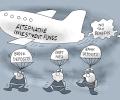
Portfolio management services (PMS), catering to higher networth individuals (HNIs), are facing tough competition from emerging alternative investment funds (AIFs), evident from their dwindling client base. In May, the number of clients for the industry stood at 125,390, down 20,528 in two months, shows data from the Securities and Exchange Board of India (Sebi). "PMS managers also have a high active ratio, which means their portfolios are quite differently positioned and more actively managed, compared to the benchmark, which is also a highlight for long-term investors.

Dining today isn't just about food -- it's about the experience and the story.

The improving outlook for the power sector has caught the interest of dividend yield funds. In the first four months of the current financial year (2023-24, or FY24), five of the six largest dividend yield funds have shown a notable increase in their exposure to stocks within the power sector. Some have even introduced new stocks to their portfolios.

'We will be looking to prune our portfolio to make GIC Re a healthier entity.'

Adani Enterprises Ltd (AEL) reported an over sevenfold year-on-year (Y-o-Y) rise in its consolidated net profit, attributable to the owners of the company, for the January-March quarter of 2024-25 (Q4FY25) due to an exceptional item gain. The conglomerate's net profit was recorded at Rs 3,844.91 crore, up from Rs 450.58 crore a year ago.

'The LVM3 rocket will orbit one Block 2 BlueBird satellite in Low Earth Orbit.'

Is it a good idea to give Rs 1 crore to someone who promises you a return of 24% per annum, wonders financial advisor P V Subramanyam.

'The minimum holding period for equities should be three years.' 'Try goal-based investing.' 'Link your equity portfolios to specific goals such as retirement, purchase of a house or car...'

Affordable pricing, a variety of themes, and the ease of transacting are among key reasons that have made smallcases a hit among young investors.
BNP Paribas is planning to set up a company that will provide discretionary portfolio management services, even as it plans to expand its private banking business in India by adding real estate and art investment advisory services.

The improvement in the performance of actively managed mutual fund (MF) schemes is acting as a key tailwind for the nearly Rs 50 trillion industry, Kotak Institutional Equities (KIE) said in a report. The report adds that the two largest listed asset management companies (AMCs) - HDFC and Nippon India - are likely to be the biggest beneficiaries. "The industry has a solid track record of delivering alpha on 10-year returns (70-80 per cent of assets under management (AUM) beat the benchmark), with shorter duration performance also on an upswing.

Biryani is set to get its own valuation. Devyani International, the largest franchisee of Kentucky Fried Chicken (KFC) quick-service restaurants (QSRs) in India, is considering the acquisition of Sky Gate Hospitality, which operates restaurants under the brand Biryani By Kilo (BBK), it said in a statement to BSE on Monday.

The heightened global uncertainty due to the US "reciprocal tariffs" on India may cause near-term corrections and market turbulence, but the long-term outlook remains constructive, market experts said on Thursday. The US has announced 27 per cent reciprocal tariffs on India, citing high import duties imposed by New Delhi on American goods.

Foreign investors continue to pull back money from the Indian equity market withdrawing a little over Rs 30,000 crore in the first fortnight of the month amid escalation in global trade tensions. This came following an outflow of Rs 34,574 crore from equities in February and Rs 78,027 crore in January.

Experts say a lot of new wealth is being generated by promoters selling their stake.

'It's advisable not to go overboard on a banking sector fund or any other sector fund.'

Tata Consultancy Services, the $73 billion IT group, is India's biggest company by market value and four times the size of any other listed Tata entity

Invest in these funds through the SIP route with at least a seven-year horizon.

Decisions should not be based on feelings, such as optimism or pessimism about the stock market or specific investment products, suggests Avinash Luthria.
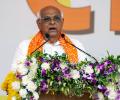
Patel was administered the oath as the 18th chief minister by Governor Acharya Devvrat at a function held at the Helipad Ground near the new Secretariat.

The Indian government has appointed Finance Secretary Tuhin Kanta Pandey as the new chairman of the Securities and Exchange Board of India (SEBI). Pandey, a 1987-batch IAS officer, will replace Madhabi Puri Buch, whose three-year tenure ends on February 28. Pandey's appointment comes at a time when the markets are experiencing bear pressure due to withdrawals by foreign institutional investors (FIIs). Pandey has extensive experience in the finance ministry, having served as the longest-serving secretary in the Department of Investment and Public Asset Management (DIPAM) and the Department of Public Enterprises (DPE). He also played a key role in the framing of the 2025-26 Budget and the drafting of the new Income Tax Bill. Pandey's appointment is for an initial period of three years.

This innovation has made mainframes the fastest-growing segment within IBM's Infrastructure business, demonstrating that even legacy technologies can continue to deliver value.
